The Parallel Revolution: A Comprehensive Guide to GPU Computing
For decades, the Central Processing Unit (CPU) was the undisputed brain of the computer, handling everything from operating systems to spreadsheets. But in recent years, a quiet revolution has taken place in high-performance computing. The Graphics Processing Unit (GPU), once a niche component reserved for video games and professional rendering, has evolved into a general-purpose powerhouse driving the world's most advanced technologies.
From training the Large Language Models (LLMs) behind modern AI to modeling climate change and discovering new life-saving drugs, GPU computing has fundamentally changed how we process data. This article explores the architecture, evolution, and transformative applications of GPU computing.
What is GPU Computing?
GPU computing often referred to as General-Purpose computing on Graphics Processing Units (GPGPU) is the practice of using a GPU to perform computation in applications traditionally handled by the CPU.
While CPUs are designed for general-purpose tasks and sequential processing (doing one thing at a time very quickly), GPUs are designed for parallel processing (doing thousands of things at once). GPU computing offloads compute-intensive portions of an application to the GPU, while the remainder of the code runs on the CPU. This hybrid approach allows applications to process massive datasets significantly faster than a CPU could alone.
The Architecture of Speed: CPU vs. GPU
To understand why GPUs are superior for certain tasks, we must look at the silicon level. The difference lies in how they allocate their transistors.
The CPU: The Low-Latency Master
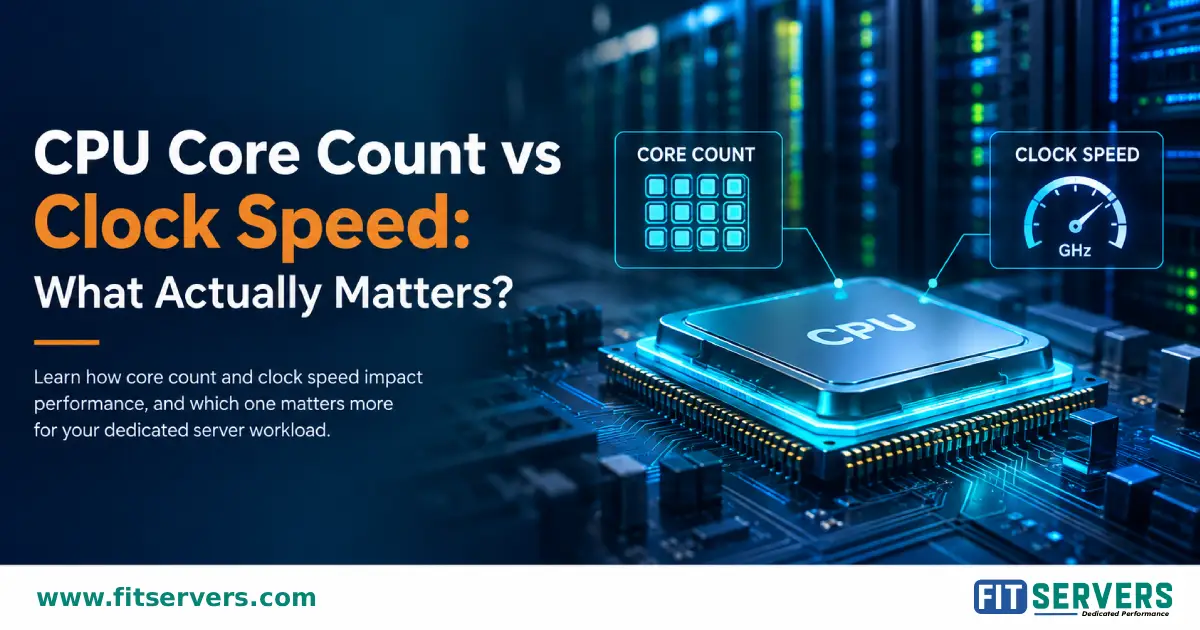
A CPU is designed to minimize latency (the time it takes to complete a single task). It consists of a few, very powerful cores (typically 4 to 64) with large cache memories. It excels at complex logic, branching, and serial execution.
The GPU: The High-Throughput Beast
A GPU is designed to maximize throughput (the total amount of work done in a given time). It consists of thousands of smaller, more efficient cores designed to handle multiple tasks simultaneously.
Technical Comparison
| Feature | CPU | GPU |
|---|---|---|
| Cores | Few (dozens), powerful, complex | Many (thousands), simple, efficient |
| Processing Style | Serial (Sequential) | Parallel (SIMD - Single Instruction, Multiple Data) |
| Focus | Low Latency | High Throughput |
| Good at | OS, Logic, Branching, I/O | Matrix multiplication, Vector math, Floating point ops |
The Evolution: From Pixels to Petabytes
The history of the GPU is a story of unintended utility.
- Fixed-Function Era: Early GPUs were "fixed-function" hardware. They were hard-wired to perform specific lighting and polygon rendering tasks for 3D games. You couldn't program them to do math; you could only ask them to draw triangles.
- Programmable Shaders: In the early 2000s, hardware manufacturers introduced programmable shaders, allowing developers to write custom code for visual effects. Clever researchers realized these shaders could be "tricked" into performing non-graphical math.
- The CUDA Revolution (2006): NVIDIA released CUDA (Compute Unified Device Architecture), a software layer that allowed developers to program GPUs using C++, bypassing the need to disguise math problems as graphics problems. This birthed the modern era of GPGPU.
Key Applications of GPU Computing
Today, GPU computing is the engine behind several major industries.
1. Artificial Intelligence and Deep Learning
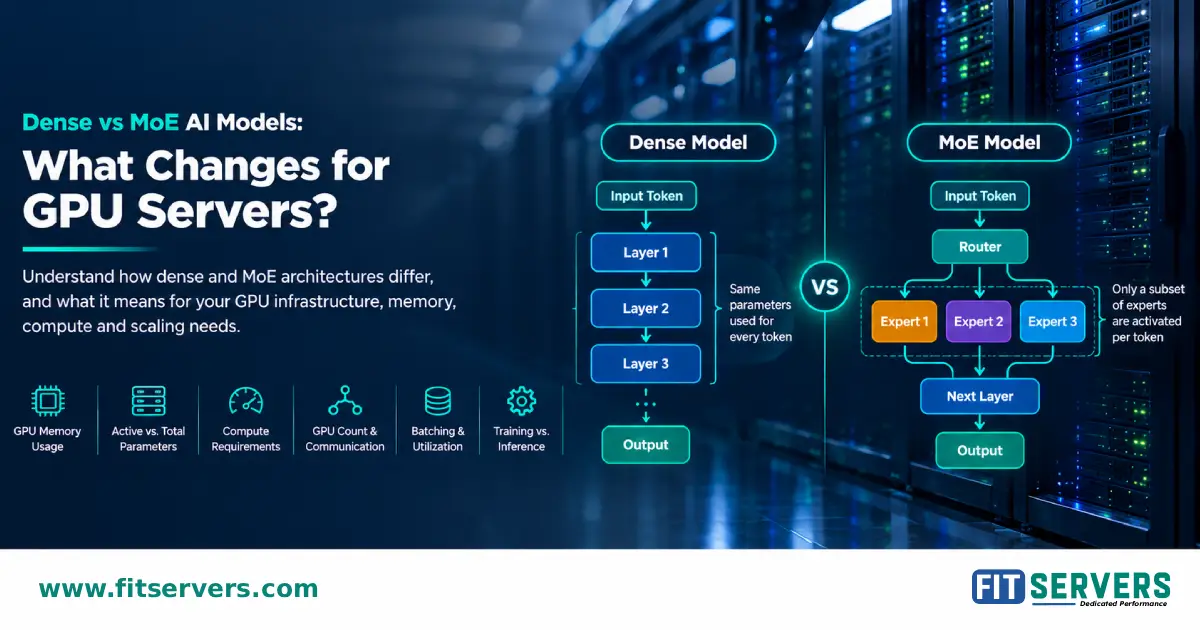
[Image of Deep Learning Neural Network structure]This is arguably the most significant application of the modern era. Deep Learning relies on neural networks mathematical structures that require multiplying matrices of numbers (weights and biases).
- The Fit: Neural networks involve billions of simple matrix multiplications. This is exactly the type of repetitive, parallel workload GPUs were built for.
- Impact: GPUs have reduced the time required to train AI models from years to weeks or days, enabling the rise of Generative AI, computer vision, and natural language processing.
2. Scientific Simulation & Research
Scientists use GPUs to model the physical world.
- Genomics: Sequencing DNA and protein folding simulations (like those used in drug discovery) require massive data throughput.
- Astrophysics: N-body simulations, which calculate how galaxies interact gravitationally, utilize GPUs to calculate the forces between millions of individual stars simultaneously.
- Weather Forecasting: Predicting the weather involves fluid dynamics equations calculated over a 3D grid of the atmosphere. GPUs allow for finer grids and more accurate predictions.
3. Financial Modeling
In the financial sector, milliseconds equate to millions of dollars.
- Risk Analysis: Banks use Monte Carlo simulations (running a model thousands of times with random variables) to predict portfolio risk. GPUs can run these thousands of potential scenarios in parallel.
- High-Frequency Trading: Algorithms analyze market data streams to execute trades based on complex mathematical triggers, benefiting from the low-latency parallel processing of modern accelerators.
4. Professional Visualization
While we distinguish "computing" from "gaming," professional visualization remains a core pillar.
- Rendering: Architectural visualization and movie VFX utilize "Ray Tracing," where the path of light is simulated for every pixel. This is computationally expensive and heavily accelerated by modern GPU architectures (like RT cores).
- CAD/CAE: Engineers use GPUs for Computer-Aided Engineering to visualize stress tests on digital car parts before they are ever manufactured.
Benefits and Bottlenecks
The Benefits
- Massive Parallelism: Ability to handle thousands of threads simultaneously.
- Performance Per Watt: For parallel tasks, GPUs often deliver more computation per unit of energy consumed than CPUs, making them efficient for supercomputing centers.
- Scalability: Adding more GPUs to a system usually scales performance linearly for compatible workloads.
The Bottlenecks
- Data Transfer (PCIe Bus): The GPU is a separate component from the CPU. Moving data from the system RAM (CPU) to the Video RAM (GPU) travels over the PCIe bus, which can be slow. If an algorithm requires constant back-and-forth communication, the speed gains of the GPU are lost in transit.
- Memory Constraints: GPUs have their own dedicated memory (VRAM), typically ranging from 8GB to 80GB on high-end workstation cards. If a dataset exceeds this limit, performance degrades significantly.
- Code Complexity: Writing code for GPUs requires a different mindset. Developers must understand vectorization, memory coalescing, and thread management to fully utilize the hardware.
The Future: Beyond Moore's Law
As Moore's Law (the observation that CPU power doubles every two years) slows down due to physical limitations, GPU computing is picking up the slack. This concept, sometimes called "Huang’s Law," suggests that GPU performance will more than double every two years due to improvements in architecture, interconnects, and AI-specific tensor cores.
We are also seeing the rise of even more specialized hardware, such as TPUs (Tensor Processing Units) and NPUs (Neural Processing Units), which take the concept of the GPU specialization for a specific task to its logical conclusion.
Conclusion
GPU computing represents a fundamental shift in computer architecture. It is no longer just about making video games look realistic; it is about solving the world's most complex mathematical problems. By unblocking the bottleneck of serial processing, GPUs have unlocked a new era of innovation in science, medicine, finance, and artificial intelligence. For any organization dealing with massive datasets or complex simulations, the GPU is no longer a luxury it is a necessity.